

3 KEY FEATURES TO NOTE WHEN ANALYZING COINS ON DEXSCREENER: A MUST READ!

In the past few years, cryptocurrencies have become a popular investment option, with many people looking to cash in on potential profits and Dexscreener has been a one-stop spot for finding all these amazing gems. However, before investing in any cryptocurrency, it's important to do your research and analysis to ensure you're making a wise investment.
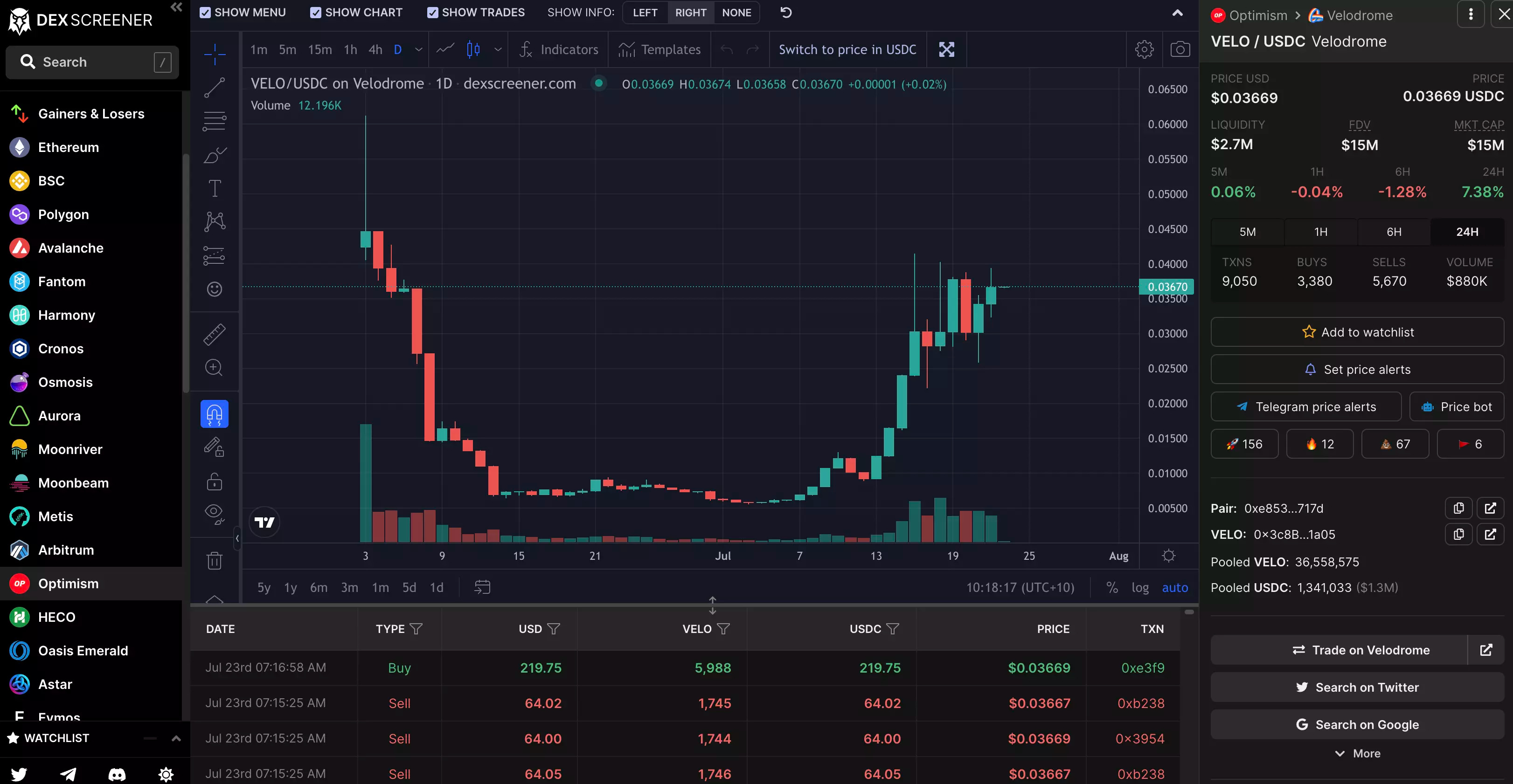
There are a few key things to look out for when analyzing cryptocurrencies on Dexscreener. First, you want to look at the coin’s market capitalization, which is the total value of all the currency in circulation. Next, you'll want to look at the trading volume, which is the number of trades that have been made in the past 24 hours. Finally, you'll want to look at the price history to see how the currency has fluctuated in value over time and any news or announcements that might be affecting its price. By considering all of these factors, you can get a good idea of the coin's overall health and whether or not a particular cryptocurrency is a good investment.
Market capitalization is simply the value of all the coins in circulation. It's a good indicator of the size and liquidity of a coin. A large market cap means there is a lot of buying and selling activity and the coin is widely used. A small market cap may mean the opposite. So what does market capitalization say about the health of a coin? Generally, a large market cap is a good sign. It means the coin is popular and in demand. A small market cap may not be as bad as it seems, however. It could just mean the coin is new and not as well known
Trading volume is one of the most important metrics for evaluating the health of a cryptocurrency. It is a measure of how much a coin is being bought and sold on exchanges, and it can give us insight into the overall demand for a coin. A high trading volume usually means that a coin is being actively traded and that there is a lot of interest in it. A low trading volume can sometimes be a sign that a coin is not very popular or that there is not a lot of interest in it. Of course, trading volume is not the only metric we should look at when evaluating a coin. But it is a good starting point, and it can give us a good indication of the overall health of a coin.
Price history is simply a data set that shows how the price of a coin has changed over time. This data can be used to identify trends and patterns, which can be used to make predictions about the future price of a coin. There are a few different ways to interpret price history, but one of the most common is to look at the price over a period of time and identify the trend. If the price is increasing, then the coin is said to be healthy. If the price is decreasing, then the coin is said to be unhealthy. It’s also important to check the news and announcement that caused the pump or dump so you could monitor them closely and buy or sell when you spot any news. To do this properly you need to also check their social media account e.g Twitter and their social media communities e.g Telegram and Discord.